


Responsible for helping prevent accidents, its design can make all the difference in the environment.
There are several types of handrails: wood, rope, iron, stainless steel, glass, and aluminum. The various types depend on the architecture in which the handrail should fit; a wrong choice in design and handrail can make it clash with the entire architecture – which is not good.
Above all, the design must provide safety in addition to aesthetics, a factor that is indispensable for the execution of the project.
It is also important to understand where your handrail will be installed: in an external or internal area? This question can change the entire concept of the project. An example of a material that works for both internal and external areas is stainless steel, due to its resistance.
The cleaning of the handrail will depend on the material chosen. Glass, for example, has specific cleaning materials, as do iron and stainless steel.
Types of handrails
Stainless steel and aluminium
Easy to maintain and clean, stainless steel or aluminium handrails are often chosen for indoor areas, where they complement the glass, with the metal component acting as a support.


Iron
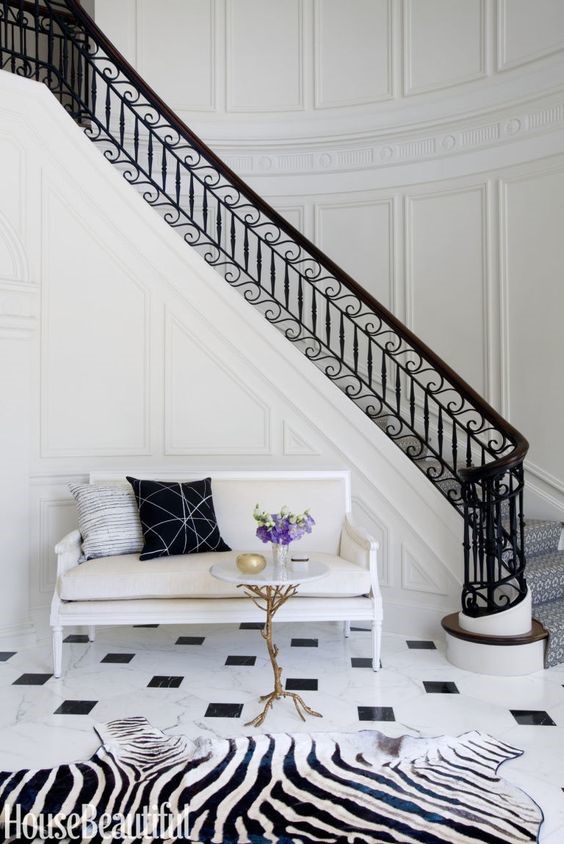
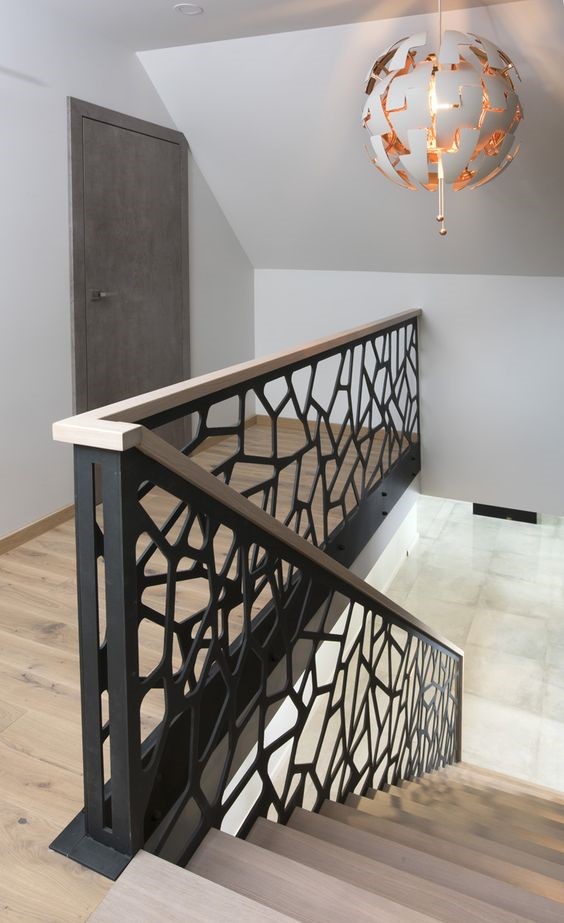
Sometimes they have a classic style and at other times a more elaborate, modernist look; although iron staircases are classic designs, they have come to be modernised through the use of a mix of materials (such as wood, for example) and, on occasion, colour.
The most common option is black-painted iron, but they can also be found in colours such as white, gold and even yellow; it all depends on the architecture of the space where the banister is to be installed.
It is worth remembering that the architect selects the design and materials in accordance with the project and the client’s wishes, but the choice of materials must be carefully considered to avoid any future problems with the handrail. Regulations regarding handrail heights and other relevant legislation must be taken into account to ensure the safety of those using the stairs.